Keyword: water
We know that Cape Cod’s 890 ponds and lakes add to the region’s natural beauty, but how much do they impact our region’s economy?
Last year we launched the Cape Cod Freshwater Initiative to enable action to protect and restore our freshwater ponds and lakes.
This Regulatory Update provides a status on projects currently under review by the Cape Cod Commission. Visit www.capecodcommission.org/regulatory for a full overview of our Regulatory program and answers to frequently asked questions.
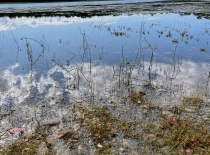
To understand the dynamics at work affecting water quality in ponds, Commission staff sought a specialist familiar with the biogeochemical interactions in freshwater bodies, the monitoring metrics needed to track these interactions, and potential strategies to address water quality problems. A limnologist helps us ask the right questions, delve deeply into the potential sources of the issues, and consider solutions to water quality decline.
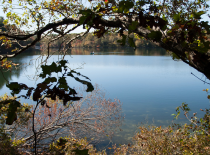
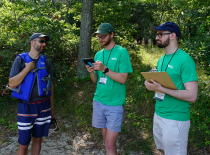
The first season of the Cape Cod Regional Pond Monitoring Program has come to a close, with final samples collected from the region’s ponds in early November.

The Cape Cod Commission will lead an effort to expand satellite-derived water quality data collection and analysis and enhance existing pond monitoring efforts, funded by a $298,527 Southeast New England Program (SNEP) Priority Research Grant.

Cape Cod communities are receiving significant funding to support housing, wastewater, and economic development projects through the Commonwealth's OneStop for Growth grant program.
This Regulatory Update provides a status on projects currently under review by the Cape Cod Commission. Visit www. capecodcommission.

The first year of the new Cape Cod Regional Pond Monitoring Program concludes this month.
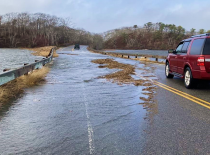
Cape Cod is increasingly vulnerable to the effects of sea level rise and storm surge and must prepare for the impact of more frequent and stronger storms. The Cape Cod Commission’s work includes tools and strategies to adapt to sea level rise and to increase the resilience of built, natural, and community systems.
Increasing t