Keyword: water
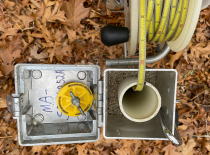
In 2022, the Cape Cod Commission debuted the High Groundwater Levels Data Viewer, providing a more accessible, up-to-date way to estimate seasonal high groundwater levels anywhere on Cape Cod. Recently refreshed with visual and usability updates, the Viewer continues to serve as an essential resource for engineers, surveyors, septic professionals, and local officials.
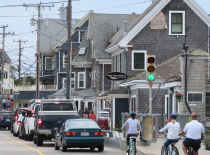
Each year, the Cape Cod Commission receives funding through the Massachusetts Executive Office of Housing and Living Communities to provide technical assistance to towns in our region. The District Local Technical Assistance (DLTA) program helps municipalities with sustainable development and encourages partnerships to achieve planning and development goals that align with state and regional priorities.
Over the years, DLTA funds have supported housing and wastewater initiatives, studies of redevelopment options and economic development strategies, and targeted local planning and zoning efforts. Seven projects received 2026 DLTA funds.
A status on projects currently under review by the Cape Cod Commission.
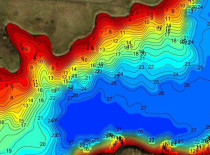
Across the region, efforts to collect and compile pond data are expanding. One of the most significant data gaps in fully assessing pond health is bathymetry, the measurement of the depth and shape of a water body’s bottom, essentially, an underwater topographic map. Bathymetric data describe how deep a pond is at various locations, the contours of the pond floor, and changes in depth that influence how water moves and mixes. To address this need, the Cape Cod Commission is initiating a project to survey bathymetry in approximately 30 ponds across the region.
A status on projects currently under review by the Cape Cod Commission.

The Cape Cod and Islands Water Protection Fund Management Board took final action to advance eight clean water infrastructure projects in six Cape Cod towns this week. The Board previously approved conditional subsidies for eligible projects included on the Massachusetts Department of Environmental Protection’s Clean Water Intended Use Plans in 2023 and 2024.
This Regulatory Update provides a status on projects currently under review by the Cape Cod Commission. Visit www.capecodcommission.org/regulatory for a full overview of our Regulatory program and answers to frequently asked questions.
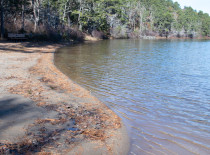
For the past three years, the Cape Cod Commission and the Association to Preserve Cape Cod have collaborated on the Cape Cod Regional Pond Monitoring Program (RPMP), an effort to collect consistent data from 50 representative ponds across the region. Since the spring of 2023, monitors, including hundreds of volunteers, have made nearly 1,000 visits to ponds, collecting almost 3,000 samples. Now, at the end of its initial three-year run, the program has brought new insight, new capabilities, and a new level of community involvement to understanding pond health across Cape Cod. Now, the Commission is seeking to expand the program and continue it for years to come.
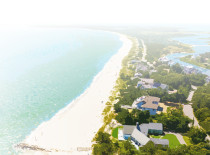
The 2025 Regional Policy Plan (RPP) serves as the foundation for local and regional planning and regulation across Cape Cod. Updated every five years, the RPP guides development and resource protection across the region, ensuring that Cape Cod’s natural, built, and community systems remain in balance.
For the past year, the Commission has been engaged in a process to update this document, holding public hearings, stakeholder meetings, and focus groups, and conducting surveys to ensure it aligns with the region's needs. The Cape Cod Commission approved the updated RPP in October and it will soon be adoped as a Barnstable County ordinance.
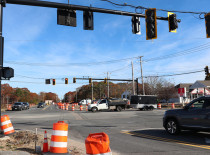
Communities across Cape Cod continue to advance a wide range of roadway, safety, and multimodal improvements. The following project updates summarize current construction activity, recently completed milestones, and upcoming work for major state and local transportation projects that are funded through the region’s Transportation Improvement Program.