Proposed Changes Impacting the Decennial Census
Download the Census Information Sheet
An accurate census count is critical. Counts from the Decennial Census are used to determine funding, services, and public policy, with impacts at the local, regional, state, and federal level. An accurate count is critical for ensuring resources are distributed appropriately.
Proposed Changes
The Census Bureau is proposing to add two new parts to the Code of Federal Regulations (15 CFR Parts 60 and 70) in advance of the 2030 decennial census to change how people determine their residency for the Census and to make changes to demographics questions. While most significant rule changes like this would have a 90-day comment period, this public comment window is 53-days. Public comment on the proposed changes closes November 2, 2026.
Residency Criteria Changes
The Census counts people at their “usual residence,” historically defined as the “place where a person lives and sleeps most of the time” as of Census Day. The proposed new definition for usual residence is the “residence at which they have lawfully spent the greatest number of days during the census enumeration period.” The term “lawfully spent” will likely limit responses, as only citizens of foreign countries who are also citizens or lawful permanent residents will be counted. This will exclude residents without legal status, asylum seekers, refugees, student and work visa holders, potentially undercounting the population.
The proposed enumeration period is January 3 to April 1 of the census year. Counting people where they have spent the most time during that period could lead to confusion among students, seasonal residents, and residents who have recently moved, as well as an overcount of snowbirds in southern states.
Demographic Data Changes
The proposed changes would prohibit the collection of race and ethnicity data, data that have been collected in every Census since 1790. This change would degrade the quality of data on racial and ethnic group distribution across the country, with implications for public health, environmental justice initiatives, market research, economic development planning, and assessing racial gerrymandering of congressional districts.
It also proposes to prohibit collection of sexual orientation data on any future census, which could have implications for counting same sex couples and households.
Potential Impacts to Cape Cod
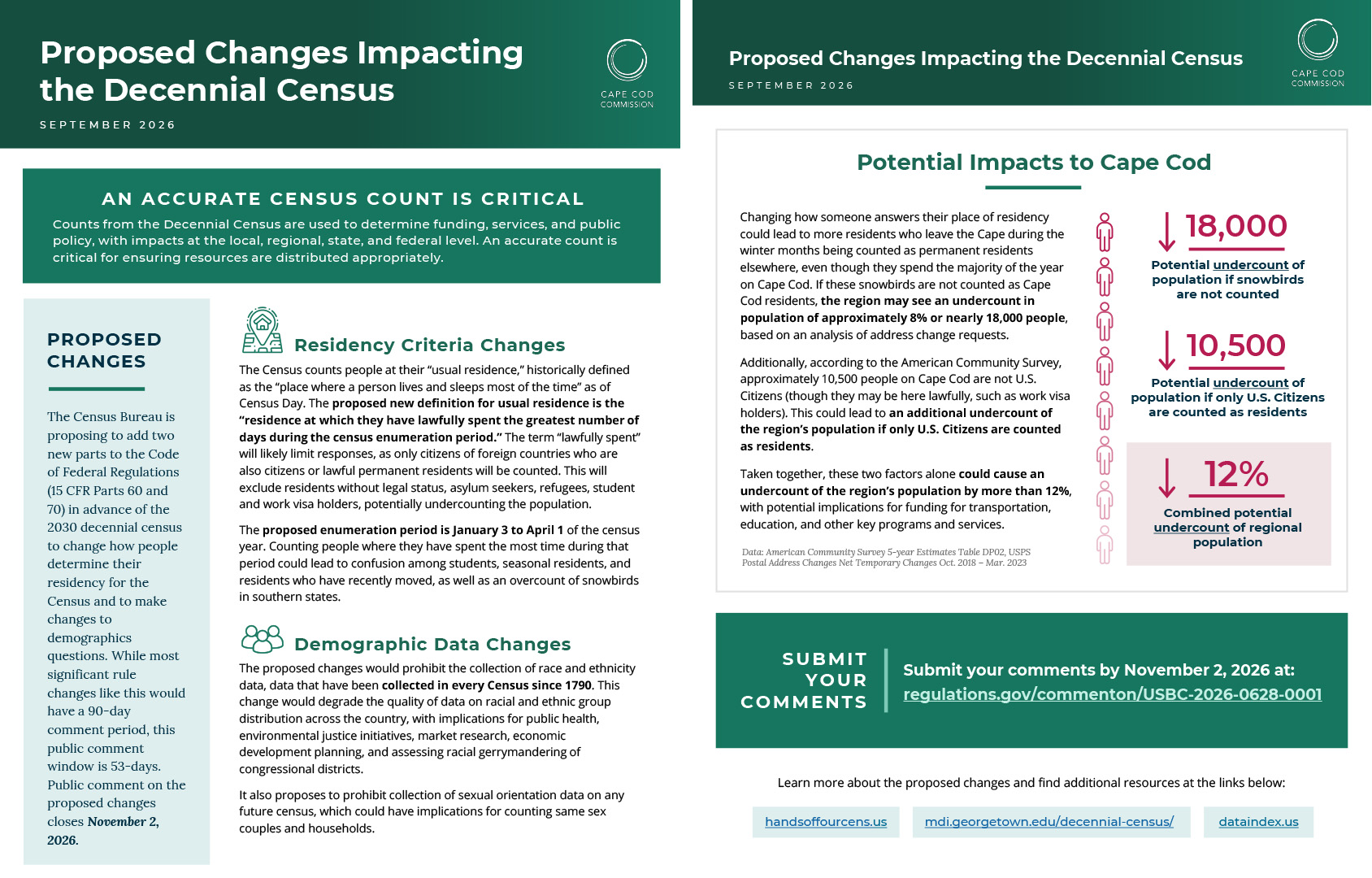
Changing how someone answers their place of residency could lead to more residents who leave the Cape during the winter months being counted as permanent residents elsewhere, even though they spend the majority of the year on Cape Cod. If these snowbirds are not counted as Cape Cod residents, the region may see an undercount in population of approximately 8% or nearly 18,000 people, based on an analysis of address change requests.
Additionally, according to the American Community Survey, approximately 10,500 people on Cape Cod are not U.S. Citizens (though they may be here lawfully, such as work visa holders). This could lead to an additional undercount of the region’s population if only U.S. Citizens are counted as residents.
Taken together, these two factors alone could cause an undercount of the region’s population by more than 12%, with potential implications for funding for transportation, education, and other key programs and services.
Submit Your Comments
Submit your comments by November 2, 2026 at: regulations.gov/commenton/USBC-2026-0628-0001
Learn more about the proposed changes:
Related Posts