Planning for a More Resilient Cape Cod
As the impacts of climate change are expected to intensify in the coming years, Cape Cod is working to strengthen its ability to prepare for, withstand, and adapt to changing conditions. The Cape Cod Commission supports the region’s fifteen towns by helping update hazard mitigation plans, providing technical assistance through the MVP and MVP 2.0 programs, and offering a suite of model wetlands and zoning regulations designed to help communities adapt to coastal change and reduce climate-related risks. Additionally, the Commission is about to embark on a new regional resilience planning initiative in partnership with the Commonwealth, creating an opportunity to advance a more coordinated approach to climate preparedness and adaptation across Cape Cod.
Developing Hazard Mitigation Plans
Hazard mitigation plans are important tools to help communities identify vulnerabilities, reduce risks, and ensure eligibility for federal funding. The Commission has supported multiple towns in developing updated plans that reflect the future climate projections, local priorities, and mitigation actions.
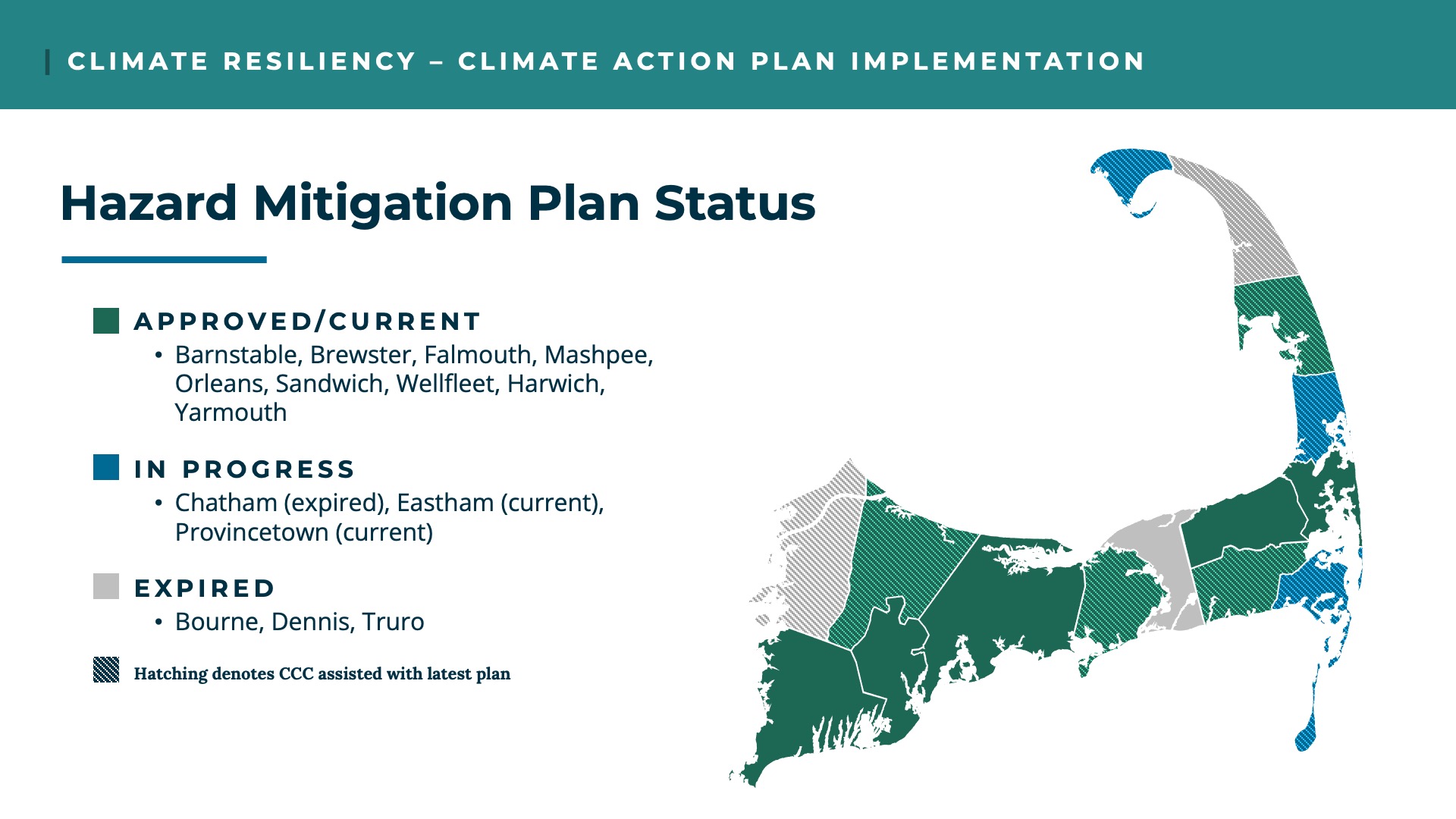
These plans highlight shared concerns across the Cape, including coastal flooding, erosion, drought, severe winter storms, and extreme weather. They also demonstrate how communities are implementing a variety of strategies, including updates to plans and regulations, infrastructure projects, natural systems protection, and education and awareness programs.
The Commission continues to provide robust technical assistance, data resources, and facilitation support to ensure each town’s plan is actionable.
Supporting the Town of Sandwich Through MVP 2.0
The Cape Cod Commission is partnering with the Town of Sandwich on its Municipal Vulnerability Preparedness (MVP) 2.0 process. MVP 2.0 is a structured, equity-focused program that helps Massachusetts cities and towns translate climate resilience planning into actionable, community-driven projects while building social and environmental resilience for the future.
The work includes helping the town analyze climate risks, exploring priority adaptation actions, and engaging residents in shaping Sandwich’s future resilience. The work complements ongoing hazard mitigation planning and strengthens alignment between local and regional adaptation goals.
Preparing for Regional Resiliency Planning
The Commission is partnering with the Executive Office of Energy and Environmental Affairs through the Regional Resilience Program to strengthen coordinated climate resilience efforts across Cape Cod.
The Commission will work with towns and other partners to identify shared regional resilience priorities, incorporate recommendations from local hazard mitigation and MVP efforts, and develop a Regional Resilience Priorities Portfolio and implementation roadmaps for priority projects. The Commission will also conduct targeted outreach to broaden participation in resilience planning and help advance at least two regional projects toward implementation.
Many of the Cape’s climate challenges, including coastal processes, transportation networks, and environmental systems, cross municipal boundaries and benefit from regional coordination. This initiative will help communities identify shared priorities, strengthen regional collaboration, and better position projects for future state funding opportunities. Towns, partners, and residents will have opportunities to participate throughout the planning process.
Adopting Coastal Resiliency Regulations
In 2024, the Commission developed a suite of model wetlands and zoning regulatory tools to mitigate and adapt to coastal challenges. The Town of Chatham recently adopted these updated regulations, and the conservation commissions in Harwich and Orleans are now working to do the same.
The model regulations, developed in partnership with the Cape Cod Cooperative Extension, Woods Hole Oceanographic Institution Sea Grant, Urban Harbors Institute, and Noble Wickersham and Heart, are based on a suite of tools for coastal floodplain resiliency. They help Cape Cod communities strengthen protections for natural resources and the built environment as flood risks increase.
Related Posts