Keyword: mpo

The Executive Office of Housing and Livable Communities is working to finalize the regulations for implementing the Seasonal Communities Act. Cape Cod Commission staff recently submitted comments on the draft regulations, recommending clear alignment between definitions of primary residence, greater specificity around how municipalities should approach zoning for undersized lots, and a more consistent minimum occupancy requirement that reflects the intent of year-round housing.
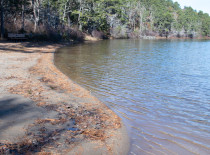
For the past three years, the Cape Cod Commission and the Association to Preserve Cape Cod have collaborated on the Cape Cod Regional Pond Monitoring Program (RPMP), an effort to collect consistent data from 50 representative ponds across the region. Since the spring of 2023, monitors, including hundreds of volunteers, have made nearly 1,000 visits to ponds, collecting almost 3,000 samples. Now, at the end of its initial three-year run, the program has brought new insight, new capabilities, and a new level of community involvement to understanding pond health across Cape Cod. Now, the Commission is seeking to expand the program and continue it for years to come.
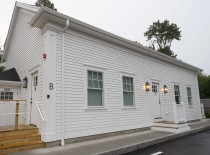
Cape Cod’s architecture helps define its sense of place. The thousands of historic structures in the region do more than recall the past, they define how the Cape looks and feels today. Historic buildings are more than just the backbone of Cape Cod’s distinct character; they are the foundation for our community’s identity. Future development and redevelopment efforts are rooted in preserving the character and identity that make Cape Cod unique.
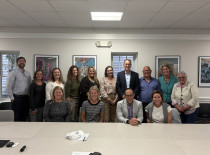
Cape Cod Commission staff and the Barnstable County Economic Development Council (BCEDC) recently welcomed newly appointment Massachusetts Economic Development Secretary Eric Paley and Undersecretary Ashley Stolba for a discussion on Cape Cod’s economic challenges and opportunities. The conversation brought together state and regional leaders to explore workforce needs, housing pressures, innovation, and long-term strategies for sustaining a vibrant year-round economy.
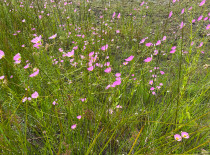
Recognizing the important ecosystem services native plants provide, Commission staff are developing an updated list of native plants for use in local and regional planning. Using the comprehensive plant list featured in the Cape Cod Freshwater Pond Buffer Guidance as its foundation, the updated list will include additional native species and indicate which are suited for upland and coastal environments as well as freshwater pond buffers. Created as part of the Freshwater Initiative, the Pond Buffer Guidance highlights the ecological benefits of native plants and their role in supporting healthy habitats.

During a meeting held on October 20, 2025, the Cape Cod Metropolitan Planning Organization (MPO) released the Federal Fiscal Year (FFY) 2026-2030 Transportation Improvement Program (TIP) Amendment 1 for a 21-day public review and comment period. A copy of the document may be downloaded at www.capecodcommission.org/mpo. Amendment 1 proposes to increase statewide TIP funding for the Harwich Elementary School, Safe Routes to School Improvement project (610670) in FFY 2026 to match the updated cost estimate of $3,538,233.

Natural systems are central to Cape Cod’s identity and resilience, shaping the region’s environment, economy, and quality of life. A series of lightning talks by Commission staff highlighted efforts to protect ponds, enhance outdoor access, and build resilience in the face of climate stress, sharing practical actions communities and residents can take.
The impacts of climate change, including erosion, sea level rise, flooding, and increased coastal storms, are reshaping Cape Cod today. At the 2025 OneCape Summit, regional and state leaders addressed the urgency of climate challenges and the innovative responses already underway.
At this year's OneCape Conference, Erin Perry, Deputy Director of the Cape Cod Commission, reflected on the 10-year journey since the adoption of the region's Section 208 Water Quality Management Plan. She reminded the audience that in 2015, wastewater was the central topic of discussion: "Ten years ago at OneCape, all we talked about was wastewater - it was the entire content of the summit."
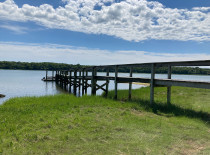
The Town of Eastham established a District of Critical Planning Concern (DCPC) in 2017, known as the Eastham Corridor Special District. It covers commercially zoned lands along Route 6 and is in place to protect community character, encourage mixed-use development, enhance the North Eastham economy, improve pedestrian and bicyclist safety and access, minimize traffic conflicts, expand affordable housing opportunities, and reduce stormwater impacts. Updates to the DCPC were recently approved by Eastham voters and the Cape Cod Commission.